
 Bob Tilden
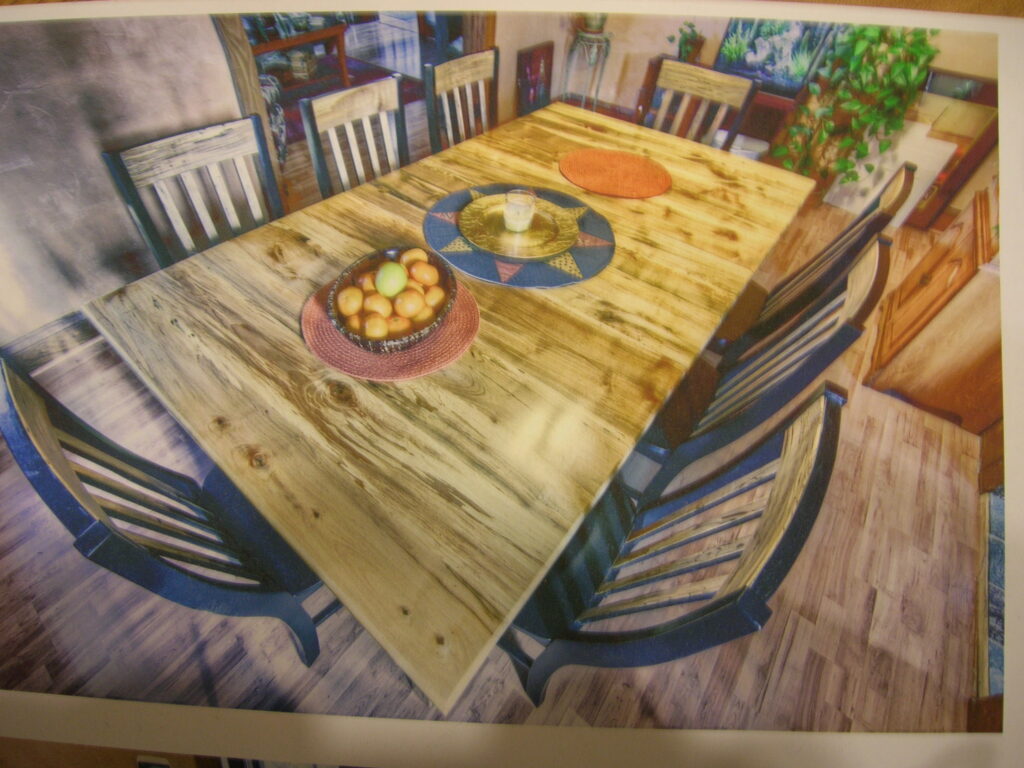
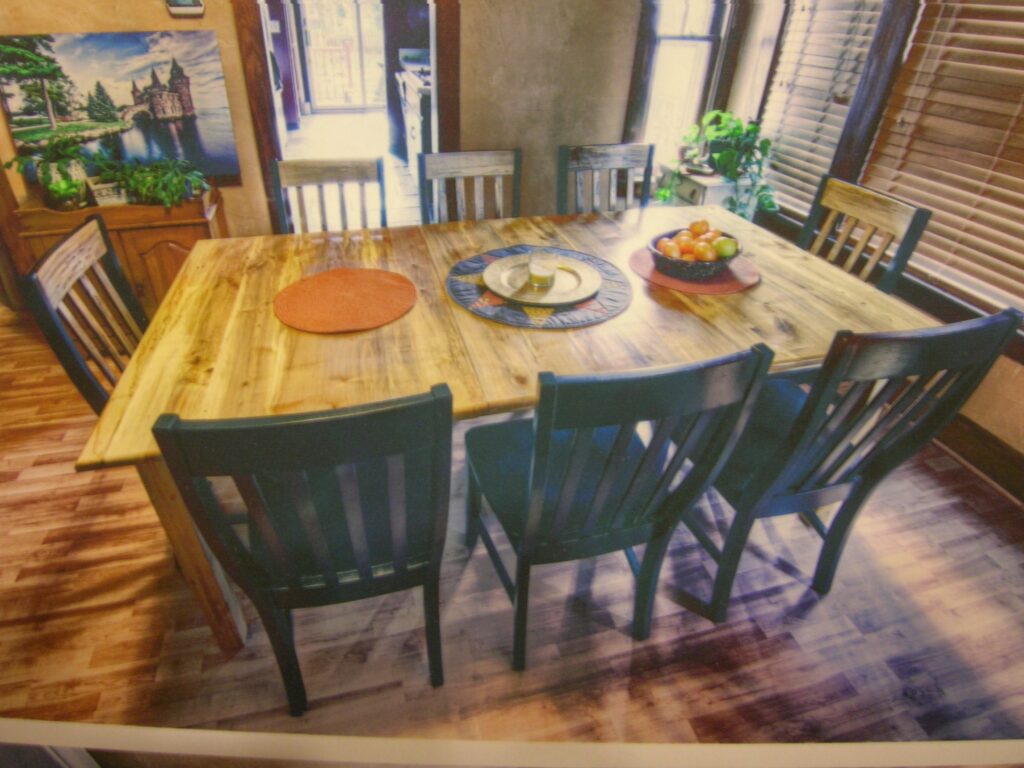
Since retiring, I look to woodworking to help me through retirement, ranging from carving oval wooden bowls to larger furniture projects. One of my favorite pieces is a spalted maple table I crafted for my daughter.
THE TINKER AND FIDDLEWITH WOODWORKS
I have stacks of hardwood lumber which I have salvaged from the near-by woods, a homemade kiln to dry it in, and a “pretty good” wood shop.
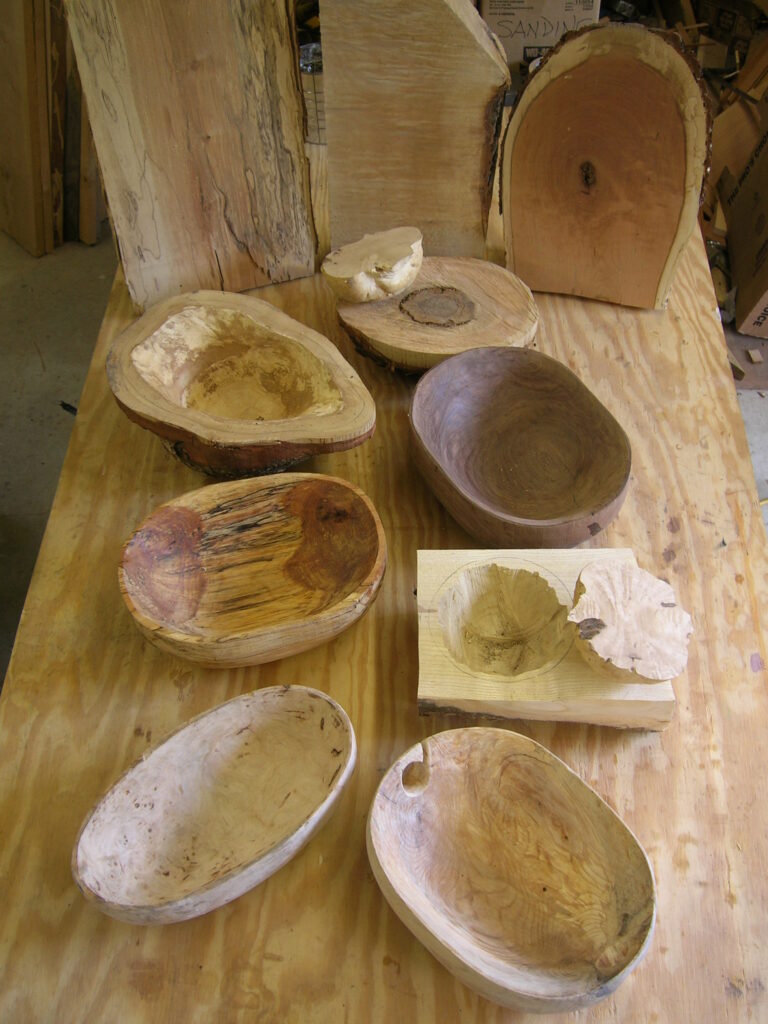
A collection of bowl blanks and rough carved bowls. The best technique is to rough out the bowl and then let it sit for a month or two, even if the wood is already “seasoned”. After drying is complete, the bowl shape and proportions are established with a rotary rasp, and then hours of scraping and sanding commence. All my bowls are cut and finished freehand; they are not turned on a lathe.
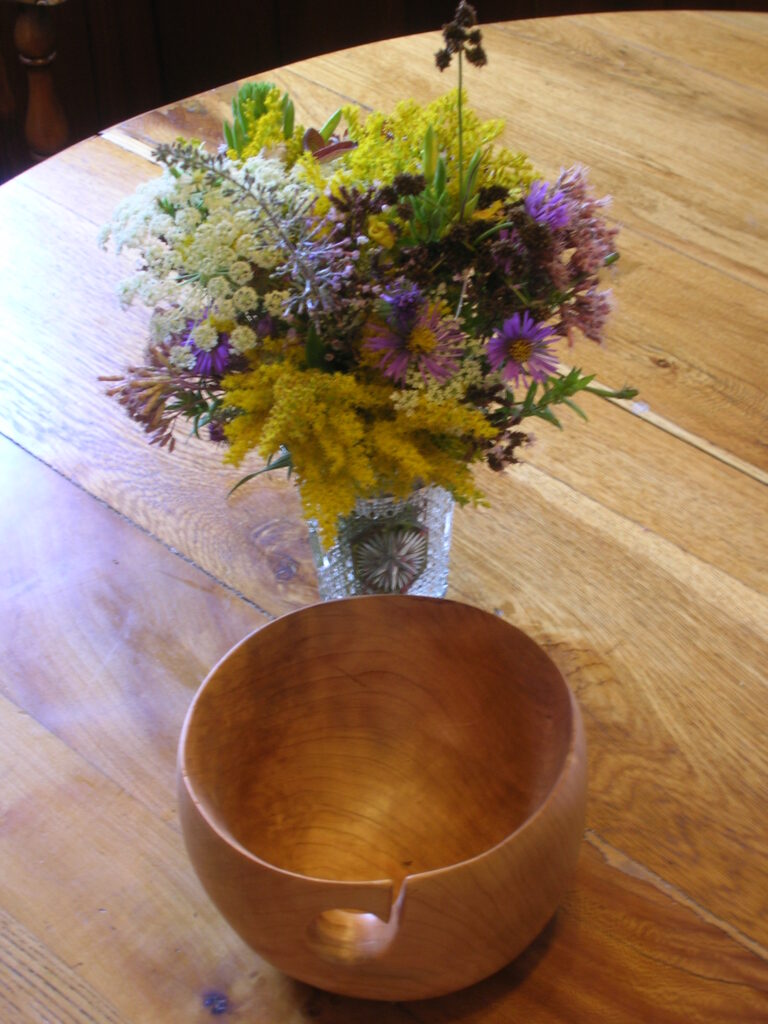
A small knitting bowl. It is large enough for a ball of yarn and has a feed hole to draw the yarn through. This particular bowl is carved of cherry, which always beautiful, even if the grain is straight and regular and has no “beauty marks”.
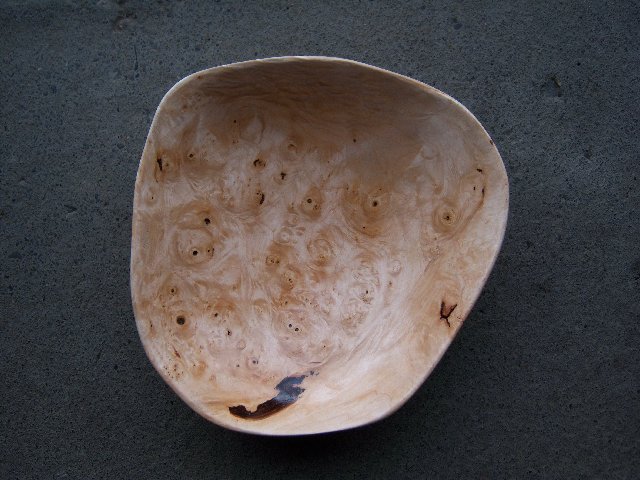
This is a shallow bowl, carved from a large but low burl cut from a deformed maple log. Most of the exterior of the bowl is the natural surface of the log, exposed by sripping the bark from the wood. The interiior shows a mostly birds- eye grain pattern,
This bowl and several others are on display at O’Shauaugnessy Antiques in Watkins Glen.
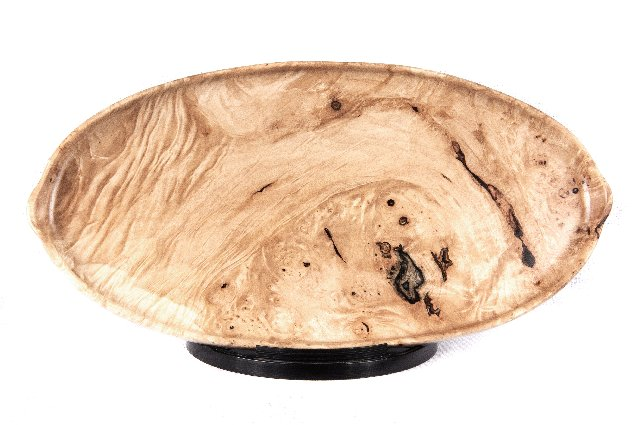
This small tray is carved from the same log as the bowl above
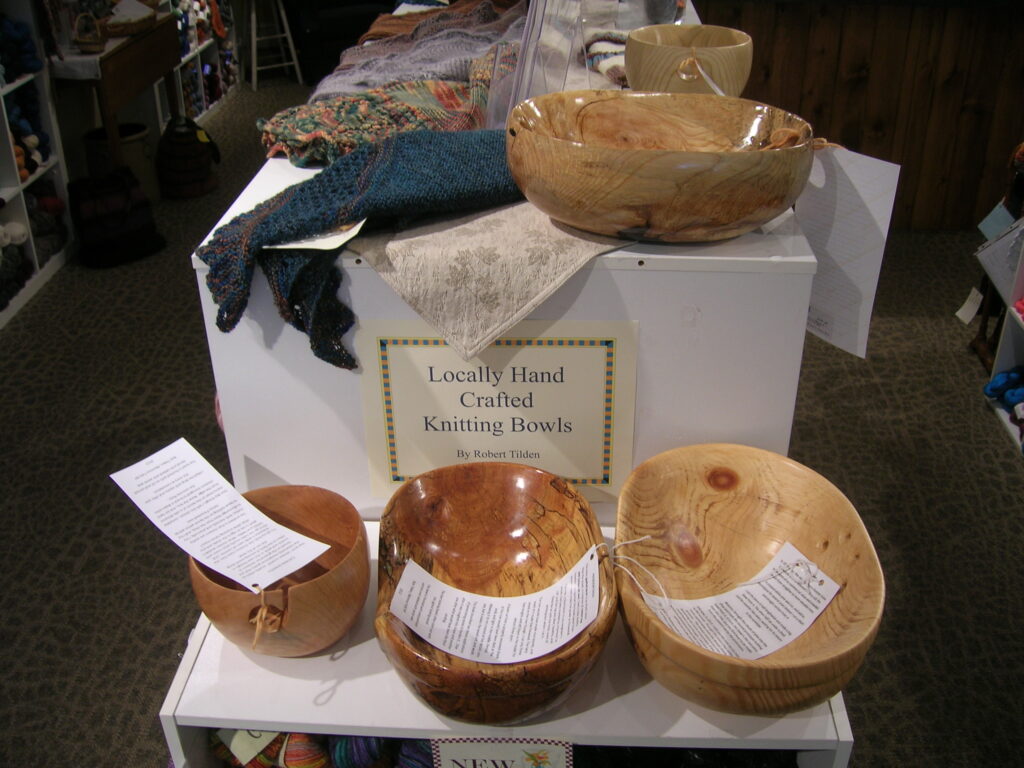
Several bowls on display at Finger Lakes Fibers in Watkins Glen NY. Both large and small bowls are shown in this picture; in the lower tier left to right, is a small cherry bowl, a spalted birch bowl and a pine bowl. On the upper tier is a bowl carved from spalted ash and in the distance a small bowl carved from sumac wood.
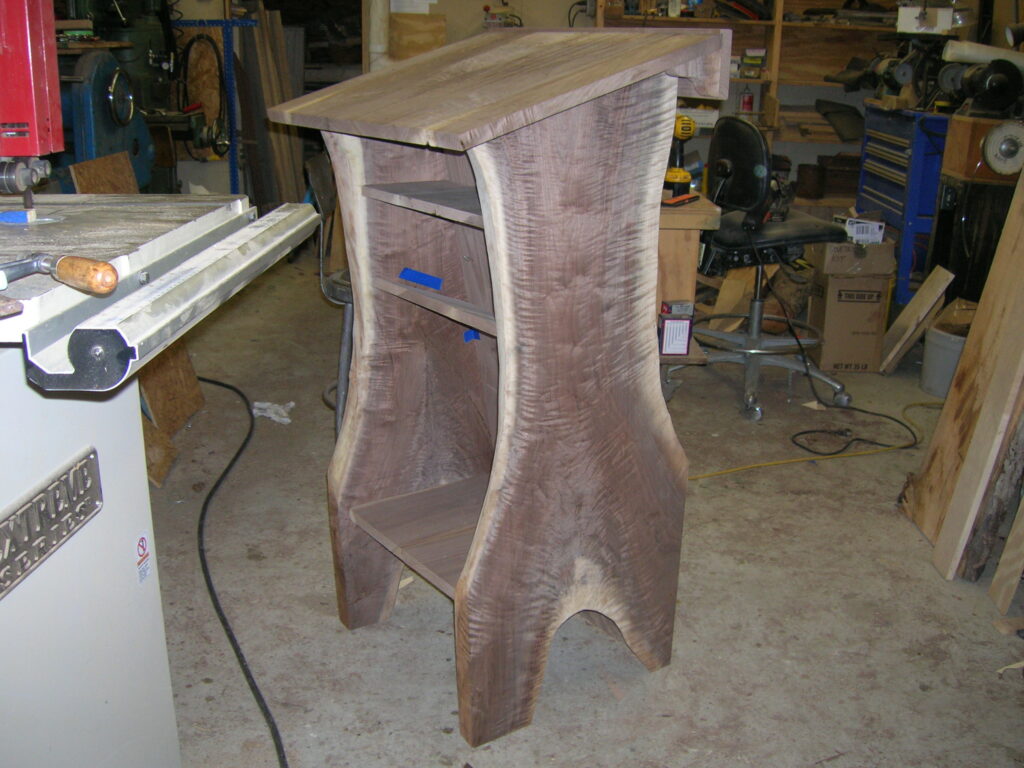
This is a rear- quarter view of a pulpit that I made for the New Hope Baptist Church in Milport, NY. This is a shop picture, and the wood isn’t finished yet, but notice the “figure” in the grain. The pulpit was built from two slabs cut from a walnut crotch that was left behind by the loggers.
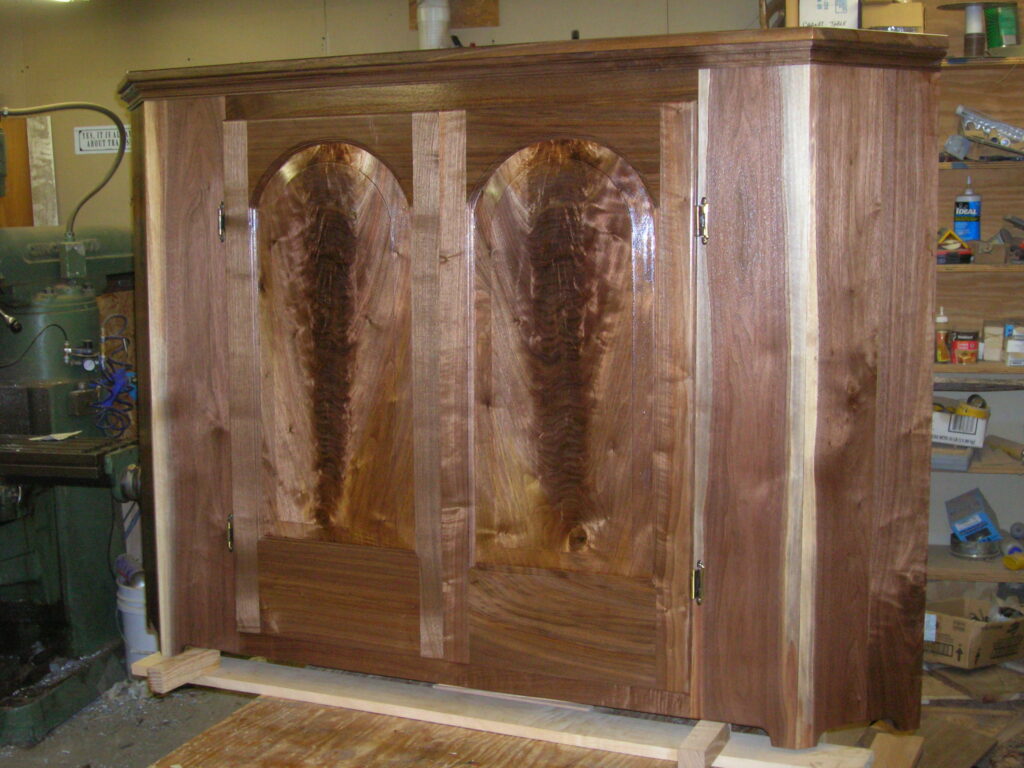
This is a corner cabinet that was built to sit in a corner behind the pulpit. It has three sliding shelves behind the doors that are paneled with a book- leaf pair of figured black walnut boards
In 2007, my daughter asked me to build her a dining room table. She asked about spalted maple, and I recalled several small soft maple trees that had been cut as cull and left to decay. I had considered cutting them for firewood, but rejected them as “too cruddy”. I returned to the logs and brought back a sample to consider. I cut it up and dried it in the microwave; the wood was sound and it was fully as pretty as any such wood you could buy.
The chairs are commercial units that I customized by making some of the spalted maple into veneer strips and gluing it to the chair backs.
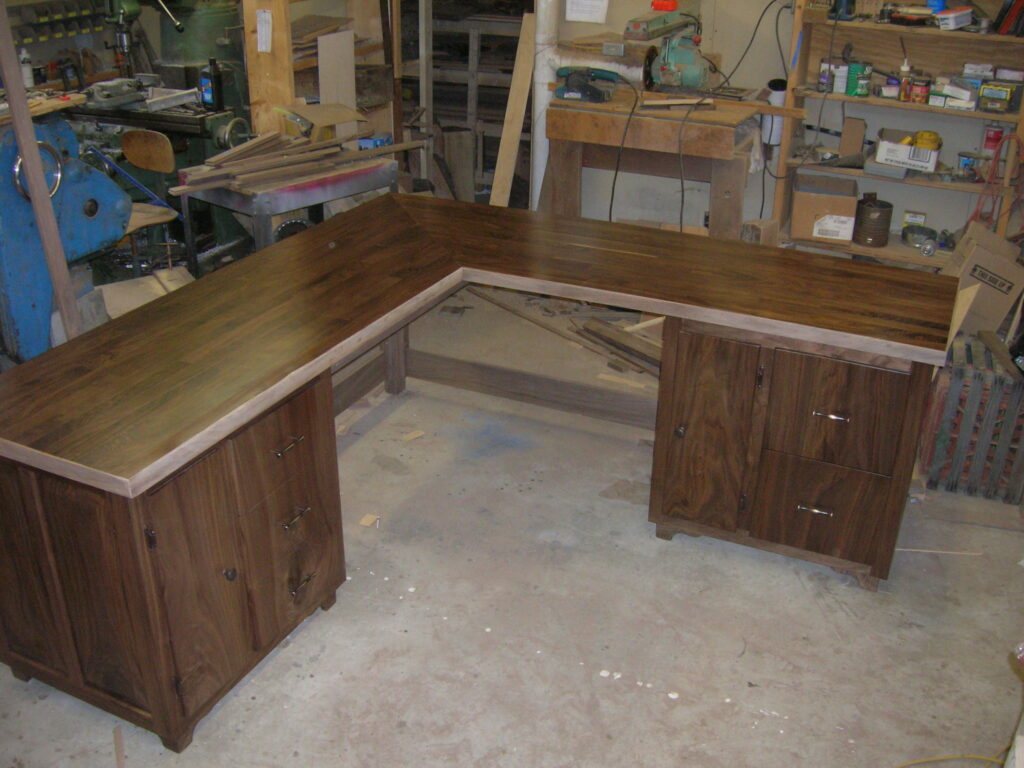
This black walnut desk was built for my daughter-in-law for Christmas 2009. It features two file drawers, and two roll- out shelves, one for the computer and one for the shredder. The top is made from narrow strips of black walnut laid on edge, like a miniature bowling alley
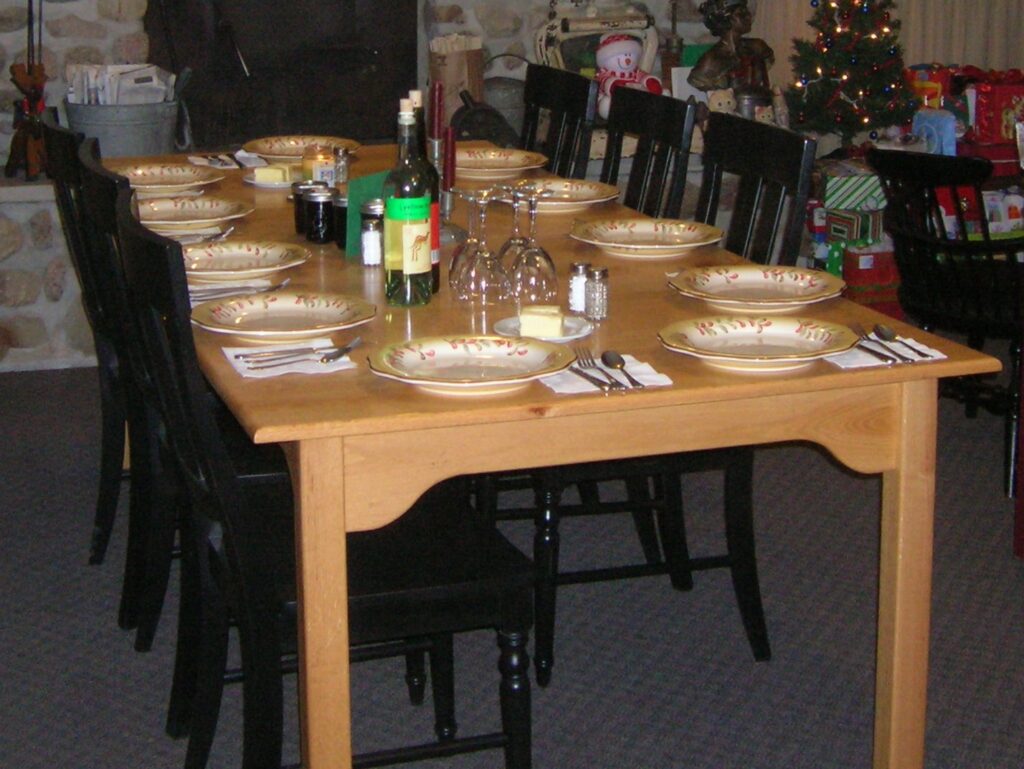
built this table for my wife for Christmas 2006, using boards cut from a dying red oak that I had culled from our woods in 2003
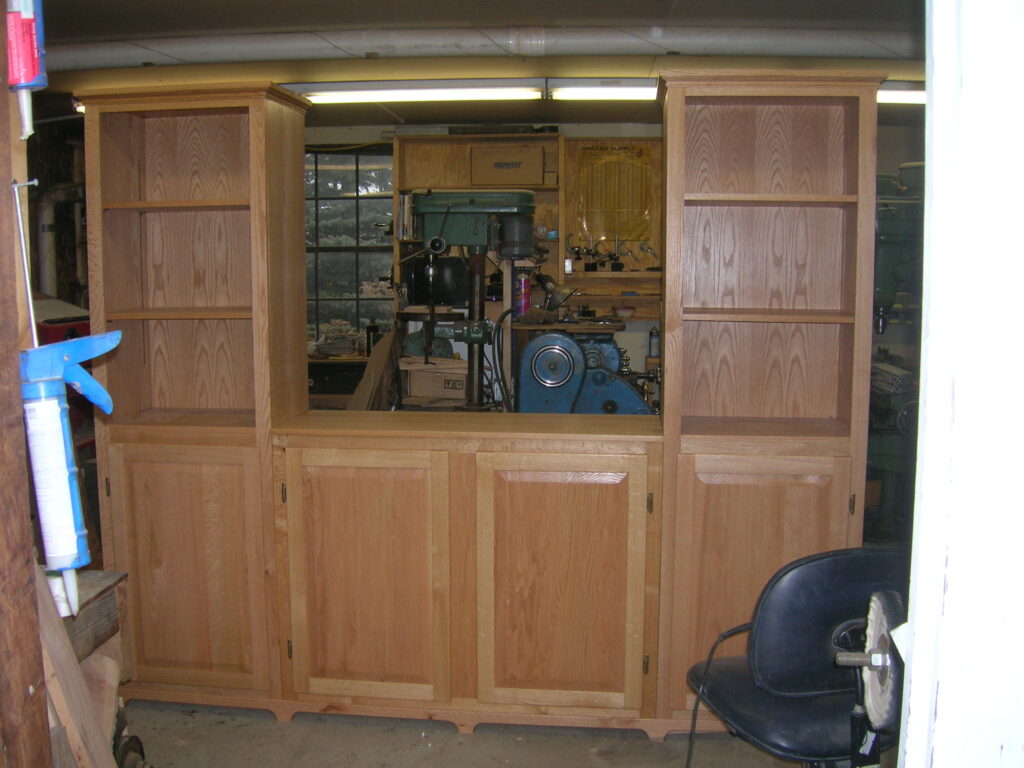
This entertainment center was my wife’s Christmas 2011 present. It came from the same tree as the table did.
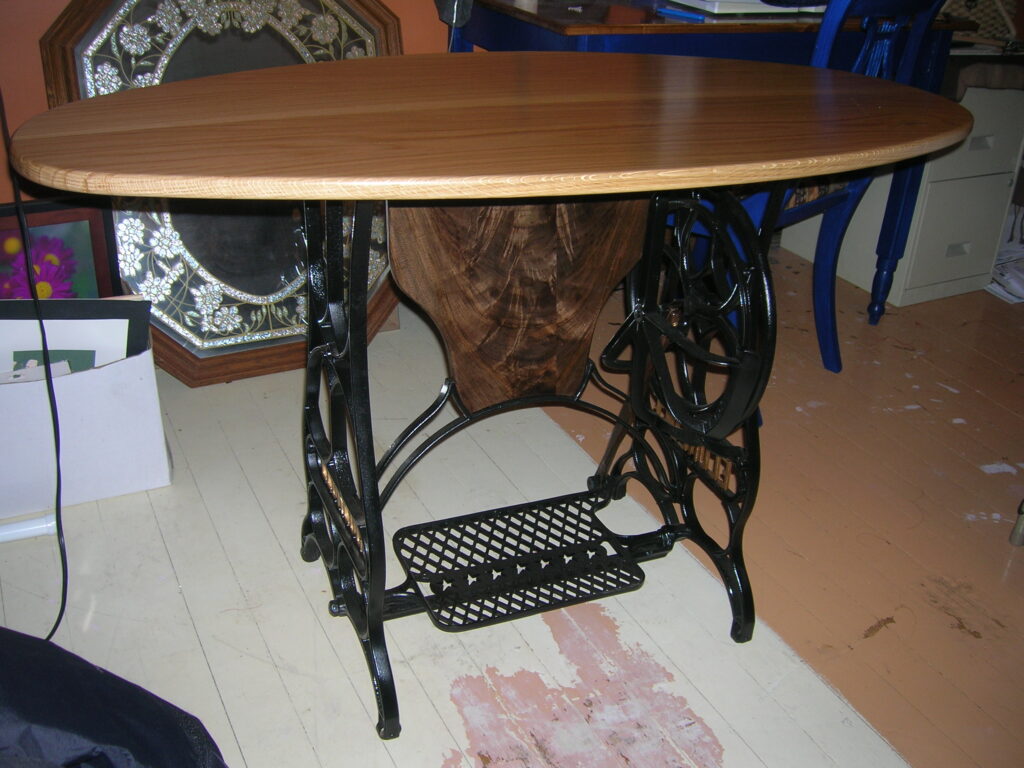
This was a (sort of) quick ditty that I did for my daughter’s sewing room. The oval white oak top sits on an old Eldridge sewing machine base. A piece of figured black walnut fills in where the cast iron base was broken.
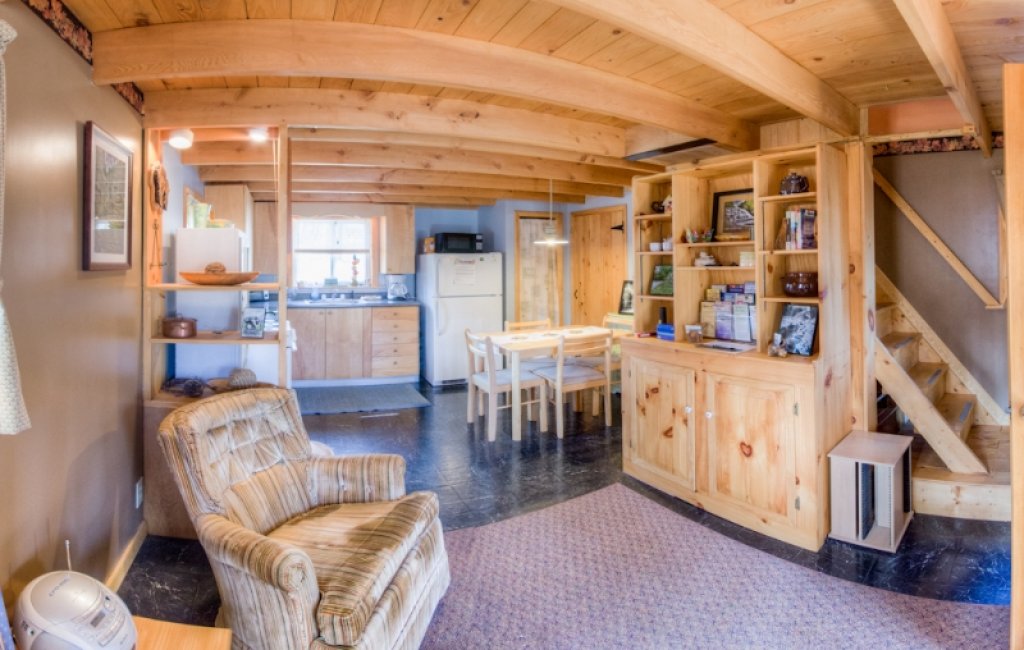
The hutch in this picture was made from a white pine tree that grew right about where the refrigerator stands near-by. I tried to avoid cutting the tree when we built the cabin, but any other solution made more problems. The hutch is a nice way to remember the tree.


Add comment